 Xinping
Xinping
Xinping
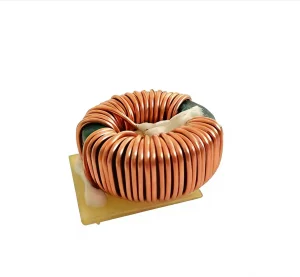
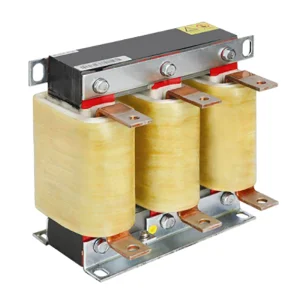
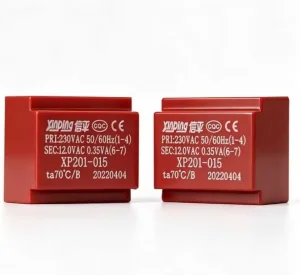
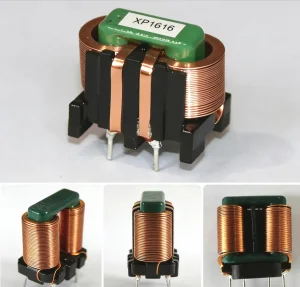
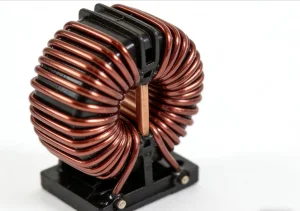
In the rapidly evolving landscape of power electronics, the demand for high-efficiency differential mode toroidal choke coil inductors has reached a critical inflection point. As a leader in the industry, our factory in Dezhou specializes in providing precision-engineered electromagnetic solutions that serve as the backbone for stable power conversion in industrial, automotive, and consumer electronics applications.
Our commitment to E-E-A-T (Experience, Expertise, Authoritativeness, and Trustworthiness) is reflected in our rigorous R&D processes, ISO-certified manufacturing facilities, and a long-standing history of delivering high-frequency, low-frequency, and industrial control components since 1992.
Modern procurement strategies are shifting towards "Total Solution Partnerships" rather than simple product acquisition. Global manufacturers are increasingly seeking suppliers who offer comprehensive technical support, from initial CAD simulation to full-scale reliability testing. Our factory empowers your growth by providing rapid prototyping and customized coil configurations that address the unique noise suppression challenges in high-frequency switching circuits.
The future of power induction lies in miniaturization without sacrificing current density. Our technical team is pioneering the use of advanced flat-wire winding technologies and specialized ferrite materials to maximize inductance efficiency. By integrating AI-driven design tools and automated production lines, we reduce variation and ensure that every inductor meets the stringent standards of the modern smart grid and EV charging ecosystems.
Q: What is the primary advantage of your toroidal choke designs?
A: Our toroidal designs minimize flux leakage and EMI, providing superior noise rejection in differential mode applications, which is essential for compliance with global electromagnetic compatibility (EMC) standards.
Q: How do you ensure product reliability?
A: We utilize advanced municipal key laboratories and multiple reliability testing stages, including no-load and pressure testing, to ensure that each unit performs under extreme conditions.