Xinping Xinping

Top 10 Industrial Control Transformer Manufacturers in China

Time:2026-11-04 Author:Isabella
0%

Industrial control transformers are small components with an outsized role in reliable machine operation. They supply suitable voltages to control circuits used with relays, contactors, sensors, and other equipment. In a cabinet, the right unit can help keep a control circuit stable when loads switch. The wrong rating may cause nuisance trips, overheating, or unreliable operation. Details matter.

This guide to the Top 10 Industrial Control Transformer Manufacturers in China introduces suppliers serving industrial automation and electrical equipment markets. It offers a starting point for comparison, not a universal ranking or a substitute for technical review. Manufacturer capabilities, product ranges, and documentation can change, so buyers should confirm current specifications directly. That step is easy to overlook.

When evaluating a supplier, check primary and secondary voltage, VA capacity, frequency, insulation class, temperature limits, and mounting requirements. Also review applicable test reports, quality certifications, customization options, and after-sales support. Ask how the transformer performs under the actual control-circuit load, including switching conditions. A catalogue rating alone may not tell the full story. Some specifications need closer scrutiny.

Price and delivery time are useful, but they should not outweigh fit and traceable documentation. Compare equivalent models and clarify what each quotation includes. The manufacturers featured here provide a practical landscape of China’s supply options; however, individual suitability depends on the application and verification. No shortlist can make that decision for you.
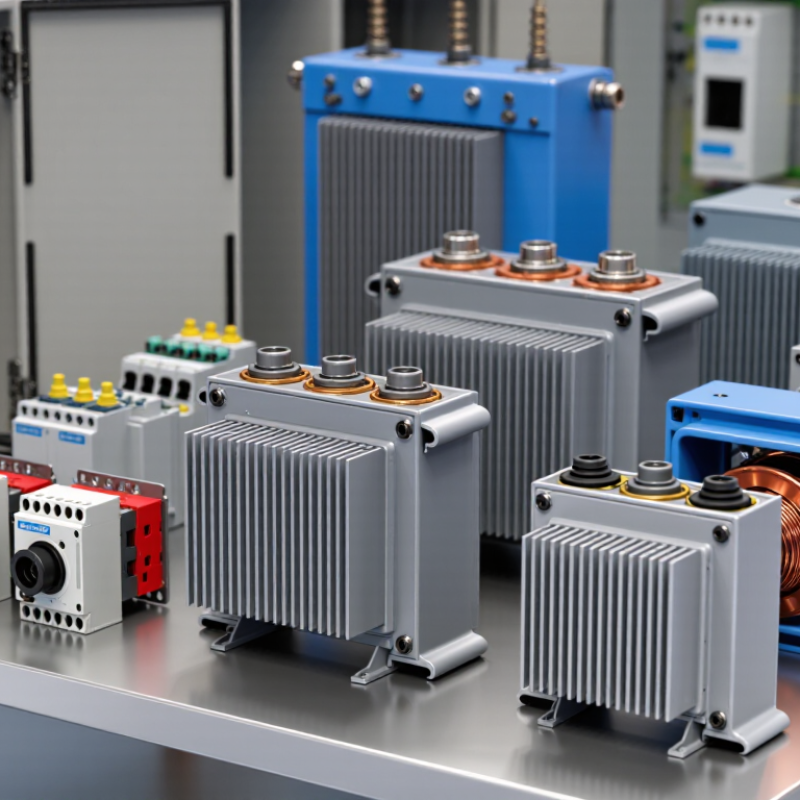
Top 10 Industrial Control Transformer Manufacturers in China

Industrial Control Transformers: Definition, Design, and Applications

An industrial control transformer converts supply voltage to the level required by control circuits and separates those circuits from the main power system. Inside, primary and secondary windings surround a laminated steel core. This compact design supplies contactors, relays, sensors, and programmable controllers in machine panels, conveyors, and HVAC equipment. Small part. Big consequence.

Sizing requires more than matching the circuit’s steady-state load. Contactors and solenoids can draw several times their normal current during energization, causing voltage dips that may reset controllers. Engineers should check inrush VA, secondary voltage drop, duty cycle, insulation temperature rating, and protective-device coordination. The IEA’s Electricity 2025 report estimates that global electricity demand grew by 4.3% in 2024, highlighting the growing importance of dependable electrical infrastructure. That figure is not specific to control transformers, but it gives useful context for industrial power needs. A calculation can look complete and still miss a brief inrush event. Field checks matter: measure voltage while the largest coil starts, then verify that the connected controls remain stable.

Industrial Control Transformers: Common Control-Circuit Voltages

Typical nominal secondary voltages used to supply industrial control circuits. Actual choices depend on regional standards and equipment requirements.

Control transformers step line voltage down to a level suited to control devices such as relays, contactors, and sensors. Select a transformer’s VA rating to meet the connected load and any applicable inrush requirements.

China’s Industrial Control Transformer Manufacturing Landscape

China’s industrial control transformer sector sits within a vast electrical manufacturing base. The International Energy Agency’s Electricity 2024 report estimates that China’s electricity demand grew about 6.7% in 2023. That growth supports demand for control components in factories, automation panels, and power distribution systems. It does not, by itself, measure transformer sales.

Production priorities are practical: stable output voltage, insulation strength, thermal performance, and dependable operation under frequent switching. On a factory floor, a compact transformer may serve a control cabinet beside motors, relays, and variable-speed drives. Buyers typically compare rated capacity, input and output voltages, temperature rise, protection, and test documentation. Details matter.

China’s manufacturing landscape includes large-volume production alongside customized designs for specific equipment and operating conditions. The IEA figure is useful context, not proof of market size. Public data for industrial control transformers alone remains limited, so rankings should be checked against product scope, certifications, and disclosed testing methods. That gap deserves attention. A catalogue specification can look precise, yet installation conditions and actual load behavior may tell a different story.

Key Criteria for Evaluating Transformer Manufacturers

Choosing an industrial control transformer supplier requires more than comparing price sheets. Check rated input and output voltages, frequency, capacity, insulation class, and temperature rise against the actual control circuit. Ask for test records tied to the quoted model, not a generic catalog page. Small details matter. Confirm terminals, enclosure dimensions, and mounting holes fit the cabinet before production begins.

Technical confidence should be supported by traceable quality practices. Review routine test procedures, material inspection records, and how nonconforming units are isolated and corrected. A factory visit can reveal winding cleanliness, labeling discipline, and whether finished units are protected from dust and moisture. Look for clear answers on overload behavior, short-circuit withstand, and thermal performance; vague assurances are not evidence. Ask about design changes too, since a substituted core or winding can affect performance even when the nameplate looks unchanged.

Reliability also depends on delivery and after-sales support. Confirm lead times, spare-part availability, warranty terms, and who handles technical questions after installation. Request references for comparable applications, then verify operating conditions rather than relying only on headline claims. Paperwork can look polished. Still, a checklist cannot replace engineering judgment, and even careful buyers may miss a cabinet-specific issue. Record assumptions and unresolved points before approval.

Profiles of Ten Industrial Control Transformer Manufacturers in China

These ten profiles offer a practical way to compare industrial control transformer manufacturers in China without treating price as the only measure. Each profile can be read through core design, rated capacity, input and output voltage options, insulation approach, and production support. These details matter in control cabinets, where a transformer must fit the available space and supply stable voltage to relays, contactors, and other control devices. A compact unit may save panel room, but terminal access and heat management still deserve attention.

The profiles also highlight differences in testing, customization, and documentation. Look for clear specifications, wiring diagrams, and stated test procedures rather than broad claims. Ask whether a supplier can explain temperature rise, insulation class, and short-circuit protection in plain technical terms. A neat product photo helps little on its own. Published details may still leave gaps, so confirm requirements against the actual application before comparing quotations. Small omissions can change a selection.

Tips: Check the nameplate, mounting dimensions, and terminal layout against your cabinet drawing. Request test records for the exact model. If a specification seems vague, ask for clarification in writing.

Top 10 Industrial Control Transformer Manufacturers in China — Profiles of Ten Industrial Control Transformer Manufacturers in China

Anonymous industry profiles are provided because company names and brands are intentionally omitted. The specifications below describe commonly available product types and indicative ranges; they are not verified claims about any particular manufacturer, and actual offerings vary by supplier and model.

Profile Typical Product Focus Common Input / Output Configurations Indicative Capacity Range Common Design Options Typical Applications Selection and Verification Points
Profile 01 Compact single-phase control transformers for panel installation Commonly 220, 380, or 400 V primary; 24, 110, or 220 V secondary, depending on model Typically tens of VA to a few kVA DIN-rail or panel mounting; fused or unfused configurations; terminal connections Control circuits in machine tools, small automation panels, and electrical cabinets Confirm inrush capability, duty cycle, temperature rise, and mounting dimensions
Profile 02 Three-phase control transformers for industrial equipment Commonly 380 or 400 V primary, with secondary voltages selected for the control system Typically hundreds of VA to several kVA Multiple taps; enclosed or open construction; optional thermal protection Production machinery, motor-control panels, and factory automation systems Check phase arrangement, connection diagram, load profile, and short-circuit protection
Profile 03 Low-voltage output transformers for relay and PLC control circuits Common secondary outputs include 24 V AC and other control voltages specified by the system design Typically tens of VA to around 1 kVA Separate primary and secondary terminals; optional electrostatic screen on selected designs Relay logic, contactors, sensors, and auxiliary control circuits Verify secondary voltage under load and compatibility with connected devices
Profile 04 Transformers designed for control loads with elevated momentary inrush Input and output combinations vary; commonly configured for local supply and control-circuit voltages Typically several hundred VA to multiple kVA Design may account for intermittent coil loading and short-duration starting demand Contactor coils, solenoids, and equipment with simultaneous switching loads Size against the manufacturer’s inrush and voltage-drop data, not steady-state VA alone
Profile 05 Multi-tap transformers for equipment used with different supply voltages Primary taps may support selected supply voltages; secondary options depend on the model Typically tens of VA to several kVA Clearly marked tap terminals; some models provide more than one secondary winding Export machinery, configurable production lines, and maintenance replacements Confirm tap selection, permitted wiring combinations, and nameplate ratings before installation
Profile 06 Encapsulated or enclosed control transformers for protected installation Common industrial input voltages with secondary ratings selected for the application Typically tens of VA to a few kVA Protective enclosure or encapsulation; mounting and ingress protection vary by model Electrical cabinets and installations where added protection from dust or contact is required Check enclosure rating, ventilation requirements, ambient temperature, and installation environment
Profile 07 Transformers with separated windings for control-circuit isolation Primary and secondary ratings are selected according to the supply and control-system design Typically tens of VA to several kVA Separate windings; insulation system and dielectric-test values are model-specific Control circuits requiring electrical separation from the incoming supply Distinguish an isolation transformer from an autotransformer; review insulation data and wiring instructions
Profile 08 Transformers for continuous-duty industrial control panels Commonly configured for standard plant supply and specified control voltages Varies from small control ratings to several kVA Thermal design selected for the stated duty; optional temperature protection may be available Panels operating for extended periods in production and process environments Review rated duty, ambient-temperature limits, losses, temperature rise, and cooling conditions
Profile 09 Transformers with multiple secondary outputs for separate control loads One primary with one or more secondary windings; voltage combinations are model-specific Typically hundreds of VA to several kVA Separate secondary terminals can support distinct circuits when the design permits Panels supplying different control-voltage groups or auxiliary circuits Check each winding’s individual rating and the permitted combined loading
Profile 10 Custom or application-configured control transformers Voltage, winding arrangement, and terminal layout are specified to match the equipment design Defined by the project load and design requirements Possible variations include custom taps, mounting, terminals, and enclosure arrangements Special-purpose machinery, retrofit projects, and non-standard control panels Request drawings, nameplate details, test documentation, and confirmation of applicable standards

Applicable requirements depend on the transformer design, market, and intended use. GB/T 19212 and IEC 61558 are relevant transformer safety-standard series; confirm the exact applicable part, edition, certification scope, and product documentation with the supplier.

Comparing Product Range, Certifications, and Market Reach

Comparing ten Chinese industrial control transformer manufacturers requires more than checking catalogue size. Look for options across control-panel ratings, primary and secondary voltages, single- or three-phase designs, and enclosure styles. A 100 VA unit for a compact machine cabinet is not interchangeable with a higher-capacity model serving several contactors and relays. Ask whether custom terminals, mounting dimensions, or thermal protection are available. Details matter.

Certifications need close inspection. Confirm that the certificate covers the exact model and production site, rather than assuming a company-wide claim applies to every unit. Check applicable safety and quality documents, test reports, insulation class, and temperature-rise data. A neat certificate is not the test result. Request a sample datasheet and compare its ratings with the intended panel conditions; vague answers deserve follow-up.

Market reach is practical, not just a map of export destinations. Review delivery times, spare-part access, technical support across time zones, and whether manuals and wiring diagrams are clear in your working language. Ask how the supplier handles a failed unit during commissioning. This can reveal more than a sales presentation. Comparisons also have limits: public information may omit factory capacity or service performance, so verify important claims directly and record what remains uncertain.

FAQS

What factors influence demand for industrial control transformers in China?

Growing electricity demand supports wider factory and automation activity. It does not directly measure transformer sales.

Which specifications should buyers compare?

Check rated capacity, input and output voltages, frequency, insulation class, and temperature rise. Confirm protection and test records too.

Why should test records match the quoted model?

Generic catalogue data may not describe the exact unit. Ask for records tied to its model and production details.

How can a buyer check whether a transformer fits a control cabinet?

Compare terminal positions, enclosure dimensions, and mounting holes before production. Small details matter.

What should buyers look for in a manufacturer’s quality practices?

Review inspection records, routine test procedures, and how faulty units are separated and corrected. A factory visit can show winding cleanliness and labeling.

Do certificates prove that every model meets the same requirements?

Not necessarily. Check that each certificate covers the exact model and production site, then review relevant test reports.

How can buyers assess delivery and after-sales support?

Confirm lead times, spare-part access, warranty terms, and technical support. Ask how a failed unit is handled during commissioning.

Are public rankings and catalogue claims enough to compare suppliers?

No. Public data may omit capacity and service performance, while catalogue details may not reflect actual installation conditions. Even careful reviews can miss a cabinet-specific issue.

Conclusion

This article explores the role of the Industrial Control Transformer in supplying stable, appropriately matched power to control circuits used in industrial equipment. It explains the transformer’s basic definition, design considerations, and common applications, then outlines China’s manufacturing landscape and the range of products serving different voltage, capacity, and operating requirements.

To help readers assess potential suppliers, the article presents practical evaluation criteria, including product specifications, quality management, relevant certifications, production capabilities, and customer support. It also profiles ten manufacturers in China without focusing on brand promotion, highlighting how their offerings and experience may differ. A final comparison considers product range, certification coverage, and market reach, giving readers a structured way to understand the sector and identify factors to investigate when selecting an Industrial Control Transformer for a particular application.

Isabella

Isabella

Isabella is a dedicated marketing professional with a sharp focus on driving brand growth and engagement through strategic content creation. With an extensive background in digital marketing, she combines her passion for storytelling with her keen understanding of industry trends to deliver......