 Xinping
Xinping
Xinping
Choosing a Power Reactor in 2026 requires more than comparing nameplate capacity. The decision affects grid stability, financing, workforce planning, and public confidence for decades. A reactor should fit the local grid, cooling resources, construction skills, and regulatory pathway. It should also match realistic demand growth, not optimistic forecasts alone.
The International Energy Agency’s Electricity 2024 report states that nuclear power supplied about 9% of global electricity in 2023. It also identifies nuclear generation as a major low-emissions source in advanced economies. The International Atomic Energy Agency reported more than 400 operating reactors worldwide, demonstrating extensive operational experience. Yet, reactor selection remains difficult. Designs differ in output, construction schedule, fuel requirements, waste systems, and maintenance needs. Small modular reactors may offer flexible deployment, but their commercial track records remain limited in many markets. That matters.
Fatih Birol, Executive Director of the IEA, said, “Nuclear power is entering a new era.” His observation supports careful evaluation, not automatic approval. The IEA’s The Path to a New Era for Nuclear Energy highlights renewed interest from governments, technology companies, and industrial users. However, cost overruns and delayed projects still challenge investor confidence. A useful comparison must examine lifetime economics, safety evidence, supply-chain readiness, and decommissioning obligations. It should test uncomfortable assumptions, too. The cheapest quotation may conceal schedule risk. The newest design may lack operating data. In 2026, the best Power Reactor is not necessarily the largest or most advanced. It is the one that can operate safely, affordably, and reliably within its specific energy system.
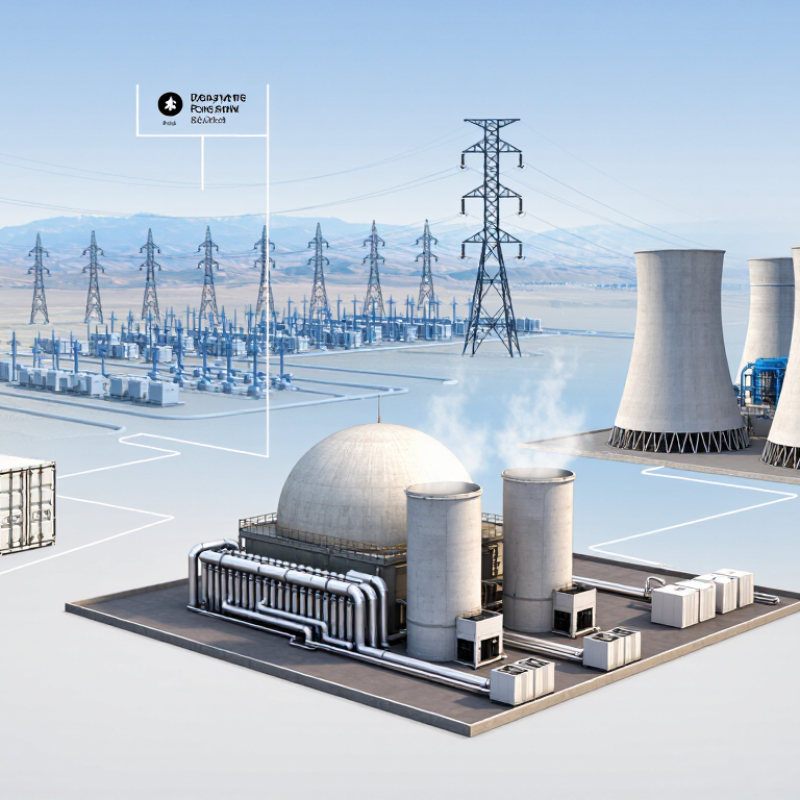
Choosing a power reactor in 2026 starts with its intended role, not its advertised output. Will it provide steady baseload electricity, follow daily demand, or supply industrial heat? These roles require different designs, operating strategies, and safety cases. The IEA’s Electricity 2024 report states that nuclear power generated about 2,700 TWh globally in 2023, supplying roughly 9% of worldwide electricity. That scale shows its value, but averages can mislead.
Define the grid duty cycle in practical terms. Record hourly demand, renewable output, reserve requirements, and planned maintenance windows. A reactor serving a stable grid may prioritize high capacity factor and long refueling intervals. A reactor supporting variable renewables may need flexible ramping and frequent output changes. According to the World Nuclear Association’s World Nuclear Performance Report 2024, the global nuclear fleet achieved an average capacity factor near 80% in 2023. Strong performance, but not a universal target.
Then set measurable requirements. Specify net electrical output, ramp rate, availability, cooling needs, construction schedule, fuel strategy, and heat delivery temperature. The IAEA’s PRIS database can help verify operating history and reactor performance data. Treat projections carefully. Site conditions often change the answer. A coastal design may face different cooling constraints from an inland project. Smaller output is not automatically better. Bigger output is not automatically efficient. Real projects rarely fit neat assumptions. That distinction matters. Test the requirements against worst-case weather, grid separation, staffing limits, and delayed maintenance. Expect to revise them.
| Intended Role | Typical Installation Point | Primary Performance Objective | Typical Voltage Class | Typical Rating or Range | Key Sizing Parameter | Important Specification Requirements | Main Selection Risk |
|---|---|---|---|---|---|---|---|
| Shunt voltage-control reactor | Transmission substations, cable-connected substations, or renewable-energy collector grids | Absorb capacitive reactive power and limit overvoltage during light-load or no-load operation | Typically 66–550 kV | Approximately 10–300 MVAr per three-phase bank | Line or cable charging current, expected voltage profile, switching frequency, and required MVAr absorption | Continuous thermal rating, maximum system voltage, insulation coordination, switching transients, audible noise, and neutral grounding arrangement | Overcompensation at high load or inadequate voltage control at light load |
| Current-limiting fault reactor | Between bus sections, generators, transformers, or utility and industrial buses | Reduce short-circuit current to within the interrupting and withstand ratings of switchgear and equipment | Typically 6.6–35 kV in industrial systems; higher classes are also used | Reactance commonly selected in the low single-digit to approximately 15% range, depending on the fault study | Prospective short-circuit current, allowable fault current, voltage-drop limit, and fault duration | Initial and short-time current withstand, peak electromagnetic force, insulation level, temperature rise, and mechanical bracing | Excessive voltage drop during motor starting or normal load operation |
| Motor-starting reactor | In series with medium-voltage motors or motor groups | Limit starting current and reduce voltage disturbance on the supply system | Typically 2.3–13.8 kV | Often designed for a short starting duty of several seconds; reactance is commonly in the 5–15% range | Motor locked-rotor current, required starting torque, acceleration time, and allowable bus-voltage dip | Short-time thermal capacity, repeated-start duty, motor acceleration performance, insulation level, and bypass arrangement | Starting torque may become insufficient if reactance is too high |
| Harmonic-filter reactor | In series with capacitor banks, tuned filters, active-front-end systems, or industrial converter loads | Detune the network, limit harmonic current, and prevent resonance with system capacitance | Typically low-voltage to 35 kV | Common detuning factors include approximately 5% and 7%; tuned designs depend on the target harmonic order | Measured harmonic spectrum, capacitor size, system impedance, resonance frequency, and expected load growth | RMS current including harmonics, peak current, frequency-dependent losses, temperature rise, and capacitor-reactor coordination | Parallel or series resonance may amplify harmonic voltage and current |
| Arc-suppression grounding reactor | Neutral of a medium-voltage distribution network | Compensate capacitive earth-fault current and reduce intermittent-arcing fault effects | Typically 6–35 kV | Inductance is selected to match the network’s total zero-sequence capacitive current; tuning is often adjustable | Cable and overhead-line charging current, network topology, fault duration, and permissible residual current | Continuous neutral current, temporary overvoltage, neutral insulation, tuning range, and earth-fault detection method | Network expansion can detune the reactor and increase residual fault current |
| Converter commutation reactor | AC side of rectifiers, battery systems, traction supplies, and power-electronic converters | Limit current ripple, reduce commutation notches, and control the rate of current change | Typically 400 V–35 kV | Usually specified by inductance in mH and continuous RMS current; short-circuit duty must also be defined | Converter topology, switching frequency, DC-link current, ripple target, and allowable voltage distortion | Saturation margin, high-frequency loss, insulation system, acoustic noise, thermal duty, and peak current | Core saturation or excessive impedance can impair converter control and power transfer |
| Renewable-grid interconnection reactor | Between a solar, wind, or battery converter and the point of common coupling | Support current control, reduce harmonics, limit fault contribution, and improve grid-code compliance | Typically 0.4–35 kV at the collector or inverter interface | Commonly specified by percent impedance, inductance, continuous current, and converter power rating | Converter output current, grid short-circuit ratio, harmonic limits, control bandwidth, and reactive-power range | Grid-code fault ride-through, transient current, harmonic current, thermal cycling, insulation coordination, and protection coordination | The selected impedance may conflict with control stability or reactive-power requirements |
Planning note: The ranges shown are typical engineering starting points rather than universal limits. Final reactor selection should be confirmed through load-flow, short-circuit, harmonic, transient, thermal, insulation-coordination, and protection studies for the specific network.
Decide whether it will provide baseload electricity, follow daily demand, or supply industrial heat. The role shapes everything.
Record hourly demand, renewable output, reserve needs, and planned maintenance periods. Use real operating data. Averages can mislead.
Set targets for net output, ramp rate, availability, cooling demand, construction time, fuel supply, and heat temperature.
No. A larger unit may produce more electricity but create grid, financing, or connection challenges. Bigger is not automatically better.
Coastal and inland sites face different cooling constraints. Drought, extreme heat, seismic risks, and water access require separate reviews.
Examine construction duration, financing costs, local labor, permitting delays, and grid connection schedules. Two years can change the decision.
They may reduce some construction risks, but commercial evidence can be less mature. That uncertainty matters.
Model delayed maintenance, low electricity demand, drought, grid separation, staffing shortages, and backup cooling failures. Uncomfortable scenarios are useful. I might still miss something.
Review fuel security, outage history, waste management, staffing, decommissioning funds, and long-term operation costs.
Recheck weak assumptions before signing a long-term investment agreement. Site data, costs, schedules, and grid needs may change.
Choosing a Power Reactor in 2026 requires a structured evaluation that begins with its intended role, expected output, operating flexibility, service life, and performance requirements. Decision-makers should compare available reactor technologies, fuel-cycle options, and safety systems according to reliability, maintainability, waste management, and emergency preparedness. The selection must also reflect local site conditions, including seismic risks, water availability, climate, land use, grid capacity, and environmental responsibilities.
A sound decision further considers construction and operating costs, regulatory requirements, workforce readiness, supply-chain resilience, and realistic project timelines. Instead of focusing only on initial investment, stakeholders should assess the complete lifecycle, including fuel, maintenance, upgrades, decommissioning, and long-term waste responsibilities. By combining technical analysis with financial, environmental, and operational risk assessment, organizations can identify the reactor option that best supports secure energy supply, grid stability, regulatory compliance, and sustainable performance through changing future conditions.
