Global power demand is reshaping the transformer supply chain. The International Energy Agency’s Electricity 2024 report projects global electricity demand growth of about 4% annually through 2026. That growth requires quieter, safer, and more efficient components.
Grand View Research valued the global transformer market at approximately USD 58.6 billion in 2023. Its analysis also highlights grid expansion, renewable integration, and industrial electrification as major growth drivers. These trends create stronger demand for the Toroidal Transformer, especially in audio equipment, medical devices, renewable-energy systems, and precision control panels.
Small details matter.
A clean circular core, tight winding, low no-load current, and reliable insulation can separate a dependable supplier from a risky one. Experienced buyers should inspect thermal ratings, safety certifications, customization limits, delivery records, and sample-testing procedures. A polished website proves very little.
Transformer engineering author John H. Harlow states, “A transformer is a static device that transfers electrical energy from one circuit to another.” His definition is simple, yet supplier evaluation is not. The best manufacturer must translate that basic function into stable voltage, low vibration, controlled heat, and consistent production.
This guide reviews seven leading Toroidal Transformer suppliers for global buyers. The comparison considers engineering capability, product range, certification evidence, manufacturing scale, export experience, and after-sales support. No ranking is perfect. Supplier data changes, and regional performance may differ. Buyers should verify current test reports, factory information, and compliance documents before placing large orders.
Toroidal Transformer Basics: Ratings, 50/60 Hz Frequency, and Core Design
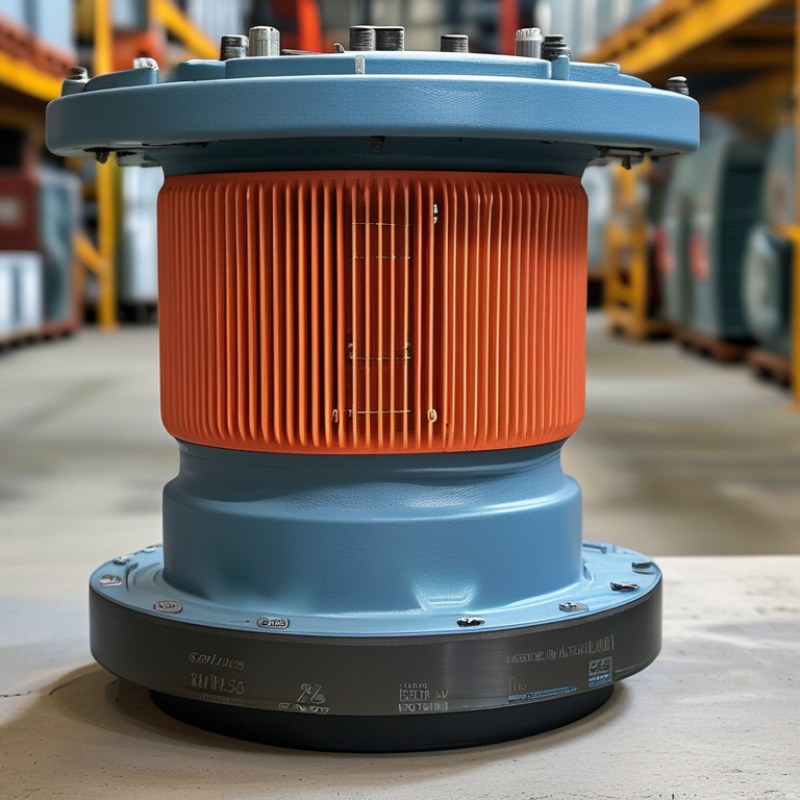
A toroidal transformer uses a ring-shaped magnetic core with windings distributed around its circumference. This geometry can reduce stray magnetic fields, audible hum, and wasted space. In practical designs, the rating is usually stated in VA, not watts. A 100 VA unit may not safely deliver 100 watts to every load.
Check the primary voltage, secondary voltage, current, regulation, insulation class, and temperature rise. For example, a 230 V to 12 V transformer rated at 120 VA can provide about 10 A under ideal conditions. Real equipment needs margin for heat, startup current, and voltage drop. I usually request test data, winding diagrams, and dielectric-strength results before approving a production sample.
Frequency matters. A transformer designed for 50 Hz may operate at 60 Hz, but the reverse assumption needs care. Lower frequency increases core flux and may cause heating or saturation. Core material and cross-sectional area control this behavior. Grain-oriented steel is common, while specialized materials can improve efficiency or reduce noise. The winding layout also affects regulation and leakage inductance. Small details matter.
Do not trust VA alone.
A useful evaluation includes no-load voltage, full-load voltage, temperature after several hours, and mechanical noise. I have seen compact samples pass a brief bench test but run noticeably hot overnight. That result deserves investigation, not excuses. Suppliers should explain tolerances clearly and provide repeatable measurements from production units.
Global Supplier Screening: IEC 61558, UL, CE, RoHS, and ISO 9001
Selecting among seven toroidal transformer suppliers requires more than comparing prices or catalogue photos. A serious screening process starts with IEC 61558 test evidence, insulation details, temperature-rise records, and traceable production samples. The standard addresses electrical safety for transformers and similar equipment. Ask for the exact part number, report date, and laboratory scope. Generic certificates are weak evidence.
UL recognition can support North American acceptance, while CE and RoHS documentation helps address European market requirements. However, CE is a manufacturer’s conformity declaration, not always an independent approval. RoHS files should identify restricted substances, supplier declarations, and testing methods. The European Commission continues to enforce substance limits under Directive 2011/65/EU and later amendments. Small details matter. Lead-free solder claims alone are insufficient.
ISO’s Survey of Certifications reports more than one million ISO 9001 certificates worldwide, so registration is common, not exceptional. For each supplier, verify the certificate scope, site address, expiry date, and certification body. Request incoming copper inspection, winding records, hipot results, and batch-level final testing. These documents reveal practical control better than polished websites. My screening would also include seven sample units from one production batch. That may expose noise, loose windings, or inconsistent varnish. No supplier passes automatically. Even a complete file can hide weak process discipline, and that is the uncomfortable part buyers should keep reviewing.
7 Best Toroidal Transformer Suppliers for Global Buyers
Global Supplier Screening: IEC 61558, UL, CE, RoHS, and ISO 9001
This chart presents the main compliance areas global buyers should verify when screening toroidal transformer suppliers. IEC 61558 addresses transformer safety, UL/NRTL evidence supports North American market access, CE relates to applicable European conformity requirements, RoHS covers restricted substances, and ISO 9001 evaluates the supplier’s quality management system. CE marking and RoHS compliance should be verified against the specific product and market requirements.
Seven Leading Toroidal Transformer Suppliers Compared by Global Capabilities
Seven leading toroidal transformer suppliers can differ sharply in global capability, even when their catalogues appear similar. One supplier focuses on audio equipment, offering low-noise cores and careful winding control. Another serves medical projects, with documented insulation systems and stricter traceability. A third supports industrial automation through custom voltage ratios, mounting options, and small production batches.
A fourth supplier has strong export experience across Europe and Asia. It provides multilingual documentation, regional testing support, and stable packaging for long-distance shipment. A fifth specializes in renewable-energy equipment, where high efficiency and controlled heat rise matter. The sixth combines automated winding with manual inspection, improving consistency without removing practical judgment. The seventh offers engineering consultation for unusual frequencies, enclosure limits, or repeated surge conditions.
Capability is not only factory size. Check test reports, sample approval records, and response times for technical questions. Ask whether prototypes receive the same inspection as mass production. Some suppliers publish impressive efficiency figures, but omit temperature data at full load. That gap deserves attention. Certification may also vary by destination, so buyers should verify applicable requirements before ordering. Lead times can change unexpectedly. A supplier with a lower quoted price may create higher costs through redesigns, customs delays, or weak after-sales support. Real purchasing decisions should compare tested performance, communication quality, production flexibility, and evidence of repeatable quality. Mistakes still happen. Careful review reduces them.
Buyer Evaluation Matrix: VA Rating, Regulation, Efficiency, and Temperature Rise
7 Best Toroidal Transformer Suppliers for Global Buyers?
A buyer matrix should start with VA rating, not catalogue price. Select a supplier that tests continuous VA output at the stated ambient temperature. A 160 VA unit may overheat when enclosed, even if the load appears acceptable. Regulation is equally important. Compare no-load voltage with full-load voltage, then calculate the percentage drop. Lower regulation usually means better winding design and steadier output. Ask for measured values, not typical claims.
The U.S. Department of Energy’s 2024 Distribution Transformer Technical Support Document estimates major long-term energy savings from improved transformer efficiency across the wider market. Toroidal models are smaller, but their no-load losses still run continuously. The IEA’s Electricity 2024 report also identifies network losses as a persistent global efficiency issue. Supplier documents should include efficiency at 25%, 50%, 75%, and 100% load. One number is not enough. Temperature rise deserves equal scrutiny. Request test results under IEC 61558 or equivalent requirements, including insulation class, ambient conditions, and thermal cut-off details. A cool case is useful, but it is not proof.
Tips: Build a weighted matrix. Give VA accuracy 25%, regulation 25%, efficiency 25%, and temperature rise 25%. Then verify two samples independently. A neat spreadsheet can still mislead. Check terminal tightness, hum, mounting clearance, and actual dimensions. Ask whether the report covers production units or only a prototype. Small wording differences matter. Reflect on your assumptions before approval.
7 Best Toroidal Transformer Suppliers for Global Buyers? - Buyer Evaluation Matrix: VA Rating, Regulation, Efficiency, and Temperature Rise
| Rank |
Anonymous Supplier Profile |
Typical VA Range |
Output Regulation |
Typical Efficiency |
Temperature Rise |
Operating Frequency |
Insulation Class |
Compliance Options |
Customization Capability |
Typical Lead Time |
Buyer Evaluation Score |
| 1 |
Supplier Profile A
High-volume industrial toroidal transformer specialist |
25 VA–5,000 VA |
≤ 5.0% |
92–96% |
≤ 50 K |
50/60 Hz |
Class B or F |
CE, RoHS, REACH; UL options available |
High |
4–8 weeks |
9.2/10 |
| 2 |
Supplier Profile B
Low-noise transformers for medical and audio equipment |
15 VA–3,000 VA |
≤ 4.5% |
91–95% |
≤ 45 K |
50/60 Hz |
Class F |
CE, RoHS; medical-grade documentation by project |
Very high |
5–9 weeks |
9.0/10 |
| 3 |
Supplier Profile C
Cost-focused supplier for OEM and control-panel applications |
20 VA–2,500 VA |
≤ 6.0% |
89–94% |
≤ 55 K |
50/60 Hz |
Class B or F |
CE, RoHS; selected safety approvals |
Medium to high |
3–7 weeks |
8.6/10 |
| 4 |
Supplier Profile D
Premium low-profile designs for compact equipment |
30 VA–2,000 VA |
≤ 5.0% |
91–95% |
≤ 50 K |
50/60 Hz |
Class F |
CE, RoHS, REACH; custom test reports |
Very high |
6–10 weeks |
8.5/10 |
| 5 |
Supplier Profile E
General-purpose supplier for lighting and automation systems |
10 VA–1,500 VA |
≤ 7.0% |
88–93% |
≤ 60 K |
50/60 Hz |
Class B |
CE, RoHS; standard safety testing |
Medium |
3–6 weeks |
8.1/10 |
| 6 |
Supplier Profile F
Small-batch engineering supplier for prototypes and replacement units |
15 VA–1,000 VA |
≤ 8.0% |
86–92% |
≤ 65 K |
50/60 Hz |
Class B or F |
CE, RoHS; project-specific documentation |
High for small volumes |
2–5 weeks |
7.8/10 |
| 7 |
Supplier Profile G
Standardized supplier for low-voltage consumer and commercial products |
10 VA–800 VA |
≤ 8.5% |
84–90% |
≤ 70 K |
50/60 Hz |
Class B |
CE, RoHS; basic production testing |
Medium |
3–6 weeks |
7.5/10 |
Evaluation note: Values are typical specification ranges used for preliminary buyer comparison. Final performance depends on input voltage, load factor, ambient temperature, enclosure, frequency, winding configuration, and the supplier’s validated test data.
International Purchasing Checks: Samples, Testing, MOQ, Lead Time, and Warranty
Global buyers should treat toroidal transformer sourcing as an engineering decision, not only a price comparison. The IEA’s Electricity Grids and Secure Energy Transitions report estimates that annual grid investment must exceed 600 billion dollars by 2030. This pressure may tighten component availability and extend lead times.
Request samples before approving production. Check no-load loss, temperature rise, insulation resistance, dielectric strength, noise, and mounting dimensions. Testing should follow relevant IEC 61558 or IEC 60076 requirements, depending on the application. Ask for calibrated test records, not just a compliance statement. Confirm the MOQ, sample charge, tooling cost, and production lead time in writing. A low MOQ can still create high landed costs. Do not assume it is cheaper.
Tips: Define acceptance criteria before quotation. Require copper or aluminum declarations, core material details, and winding diagrams. For large orders, inspect a pilot batch before shipment. Warranty terms should state coverage period, failure evidence, replacement timing, and freight responsibility. Industry quality systems such as ISO 9001 support traceability, but certification alone cannot prove winding consistency. I would also allow extra schedule time. Supplier promises can be optimistic, especially during raw-material shortages. A perfect spreadsheet is still not proof.
FAQS
Request the exact part number, report date, laboratory scope, and production sample records. Generic certificates are weak evidence. Ask for insulation details, temperature-rise results, winding records, and final testing data. The paperwork can still miss process problems.
Check the certificate scope, factory address, expiry date, and certification body. Confirm that the certificate covers the actual production site. Also request copper inspection, hipot results, and batch-level testing. A certificate alone proves less than many buyers assume.
Confirm the requirements for your destination market before ordering. Review safety approvals, conformity documents, and restricted-substance declarations. Ask for testing methods and supplier evidence, not only lead-free solder claims. Small wording differences matter.
Compare tested performance, technical communication, flexibility, lead time, and after-sales support. Do not rely on catalogue photos or factory size. Ask whether prototypes receive the same inspection as mass-produced units. A low price may create redesign or shipping costs later.
Ask for continuous VA output at the stated ambient temperature. A 160 VA unit may overheat inside a small enclosure. Check the result at the actual operating conditions. The catalogue number is not enough.
Measure no-load voltage and full-load voltage. Then calculate the percentage voltage drop. Lower regulation usually indicates steadier output and stronger winding design. Request measured values, not typical marketing claims.
Request efficiency results at 25%, 50%, 75%, and 100% load. One efficiency figure cannot describe real operation. Review temperature rise, insulation class, ambient conditions, and thermal cut-off details. A cool case helps. It is not proof.
Yes. Test seven units from one production batch when possible. Check hum, loose windings, varnish consistency, terminal tightness, mounting clearance, and dimensions. Compare the report with actual production units. My matrix might still mislead me, so independent verification matters.
Conclusion
This guide explains how to evaluate a Toroidal Transformer for international purchasing, beginning with core design, VA ratings, operating frequency at 50 or 60 Hz, efficiency, regulation, and temperature rise. It also outlines the importance of screening suppliers against recognized requirements such as IEC 61558, UL, CE, RoHS, and ISO 9001. These standards and certifications can help buyers assess product safety, manufacturing consistency, environmental compliance, and quality management practices.
The comparison framework focuses on seven leading supplier types and their global capabilities without endorsing any specific brand. Buyers can use the evaluation matrix to compare electrical performance, customization options, production capacity, documentation, and technical support. Before placing an order, purchasers should confirm sample availability, testing procedures, minimum order quantities, lead times, packaging, warranty terms, and after-sales communication. A structured review of these factors helps international buyers select reliable products that match their application, compliance, and delivery requirements.
 Xinping
